Bergey Windpower Wind Turbines 1kW, 10 kW, 15 kW
A 1 year payback on investment may be possible, then free electricity.
Tax Credits, Grants and Depreciation
may greatly reduce your costs by 80%.
Contact us for a wind and cost analysis for your location.
|
|
Monthly Kilowatt Hours
Energy Output
|
||||||||||||||||||||||||||||||||||||
|
Bergey EXCEL 15 Wind Turbine |
|
 |
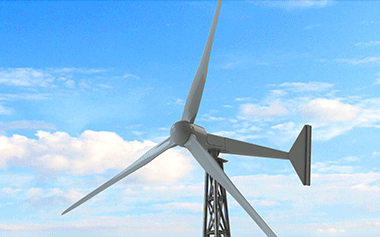 |
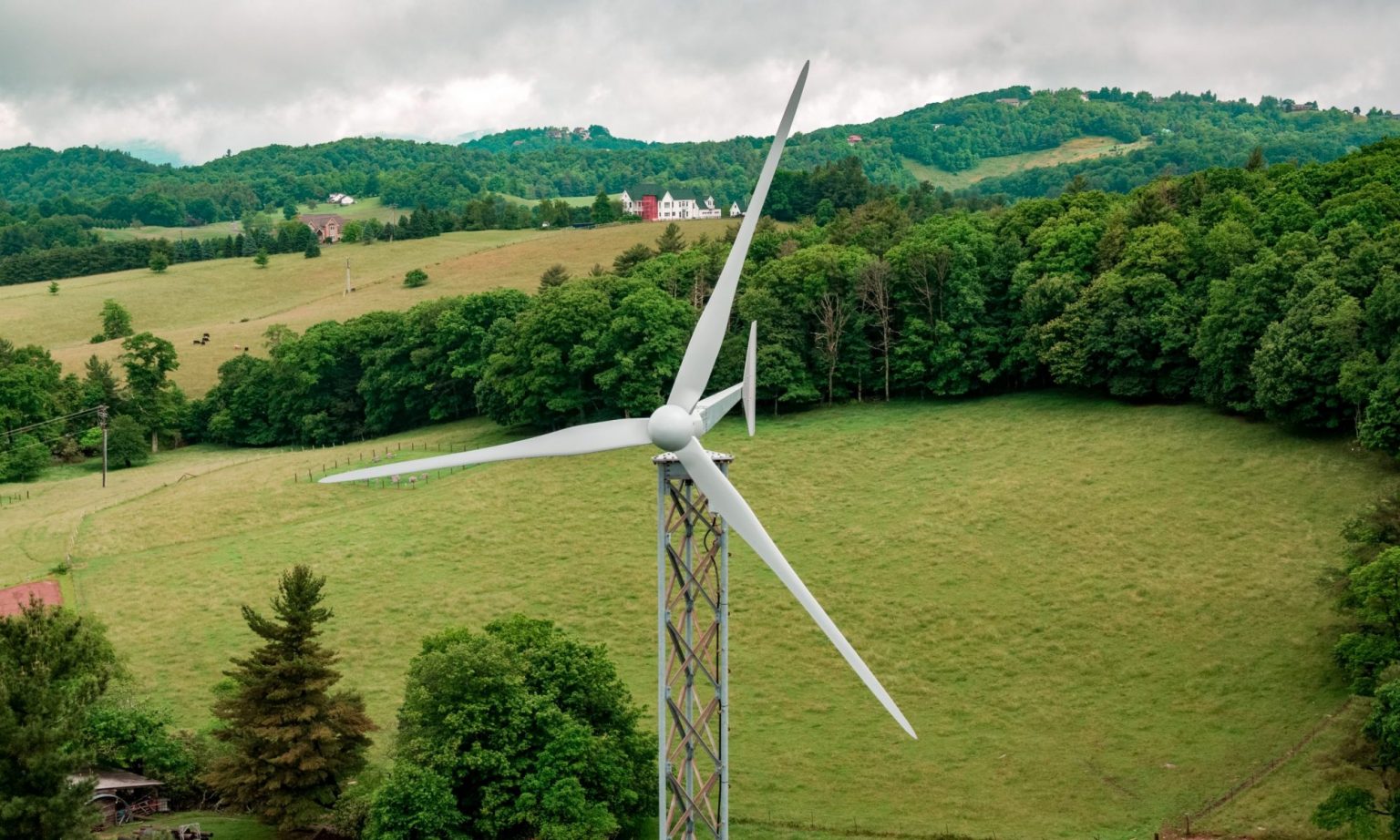
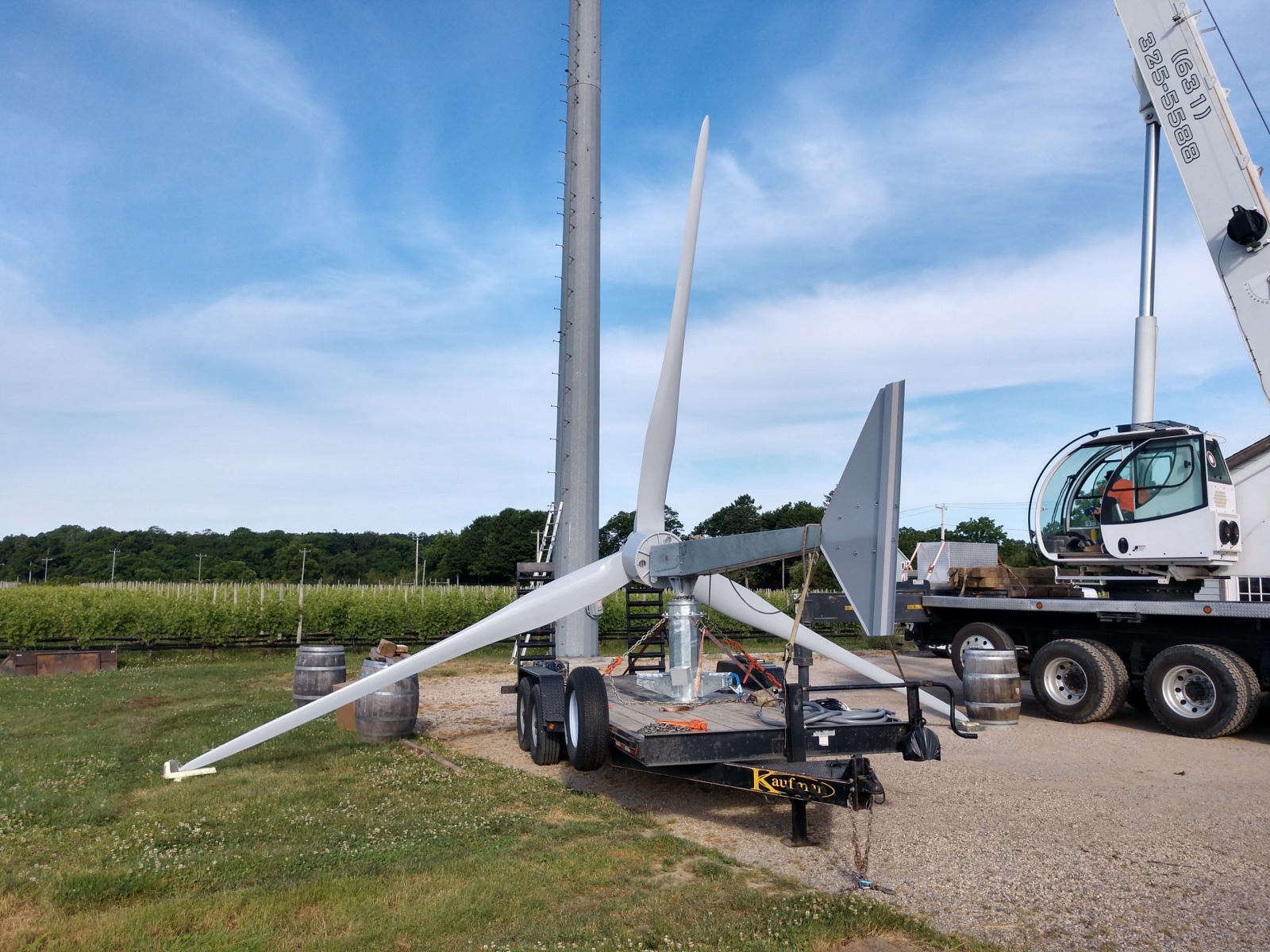
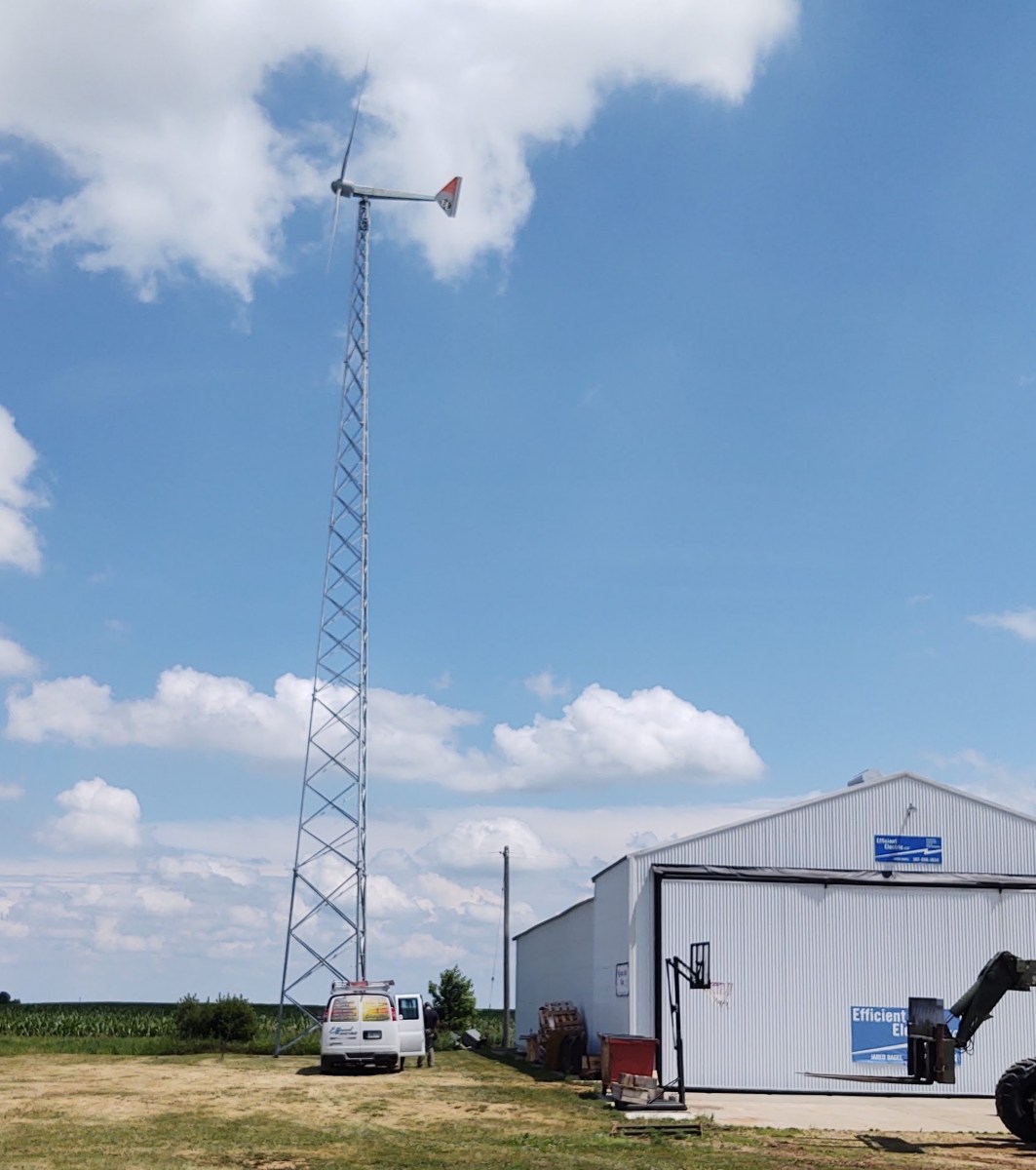
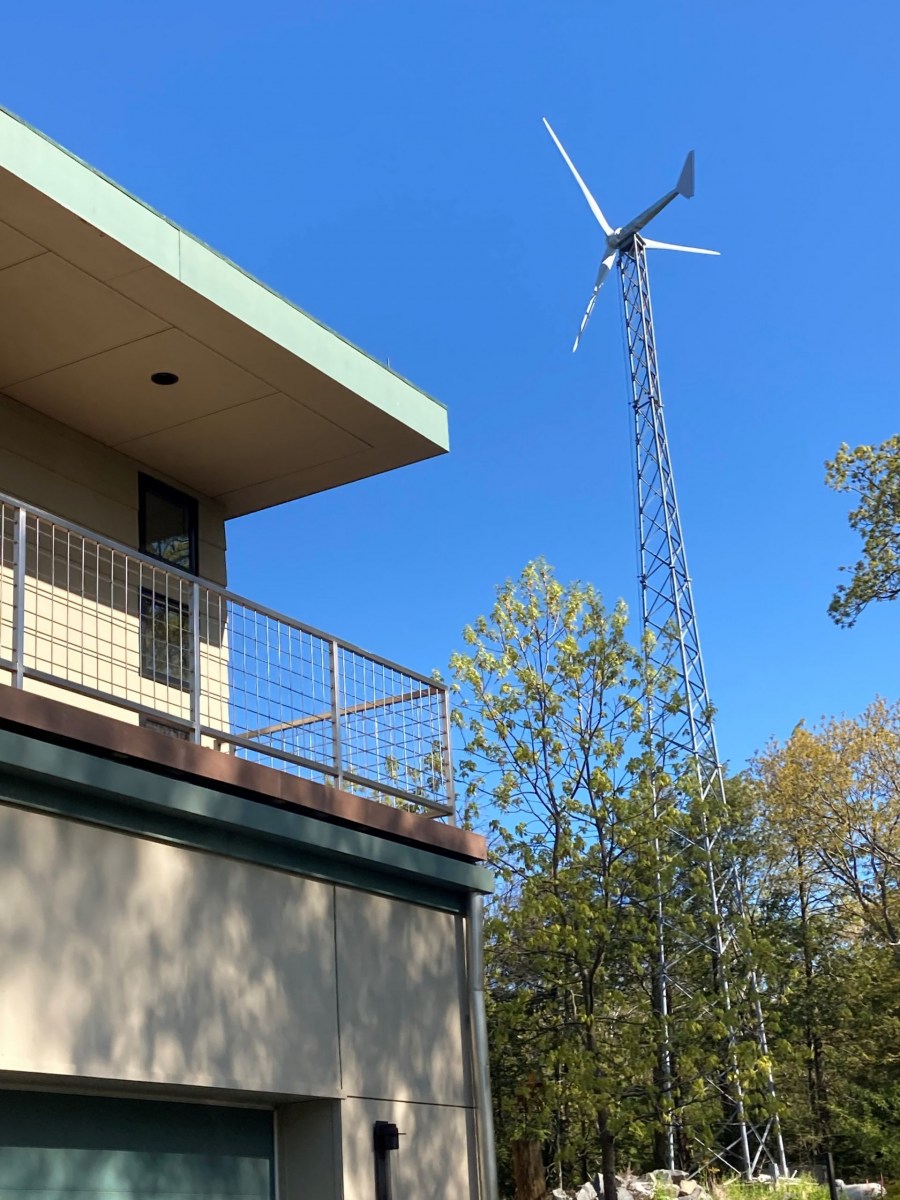
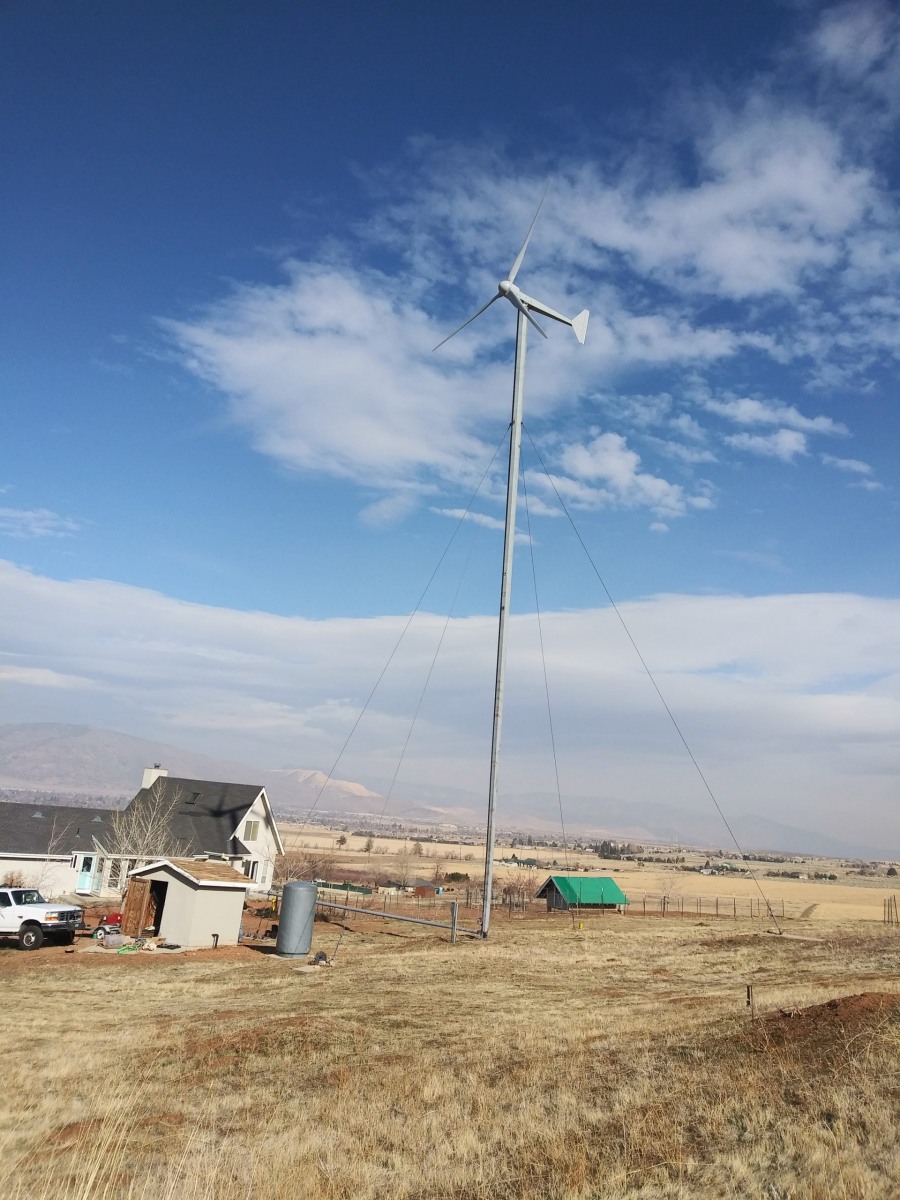
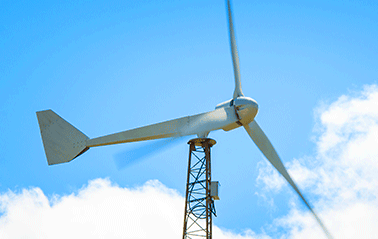
FARMS: The Excel 15 is well suited for farming operations in areas with sufficient wind resources. An Excel 15 can produce as much energy as a 35 Kilowatt solar electric system, with an 80% smaller footprint. Grants are available for agricultural producers and rural small businesses through the USDA's Rural Energy for America Program.
|
|
|
Sample
Cost EXCEL 15 Wind Turbine $48,500 |
|
BWC EXCEL Wind Turbine The BWC Excel is a ruggedly built turbine that comes with the longest warranty (10 years) in the industry. The BWC EXCEL was introduced in 1983 and it has been installed at over 1600 sites around the world. |
|
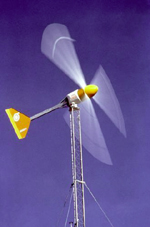 |
15 KW BWC EXCEL Grid Connect 31.5'
Blade diameter. Includes
20 kW Powersync lll and dump load, AWEA rated power 15.6 kW, Peak Power 21.8
kW, AWEA Annual Energy 30,100 kWh, cut-in wind speed 5 mph, start-up wind
speed 10 mph,
$48,500
10 KW BWC EXCEL 48 volt Battery charging $38,500 23' Blade diameter. Suited for large rural homes, remote villages and facilities, eco-tourism resorts, and larger telecommunications sites. Includes a voltage regulator. Self-Supporting Lattice Towers 60' is $12,650, 80' is $16,000, 100' is $20,000, 120' is $29,000. Also available in 140' and 160'. . A list of requirements for customer supplied towers is available. Safety Climb Kit - Anti-fall system includes down-tower safety cable and cammed slider. Does not include climber's belt/harness. $950 |
|
|
|
Bergey EXCEL 10 Wind Turbine |
||
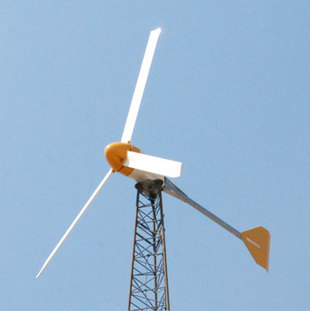 |
AWEA Rated Power:
8.9 kW @ 24.6 mph (11m/s) Peak Power: 12.6 KW AWEA Annual Energy: 13,800 kWh @ 11 mph (5 m/s) average Cut-In Wind Speed: 5.6 mph (2 m/s) Cut-Out Wind Speed: None Furling Wind Speed: 31-45 mph (14-20 m/s) Max. Design Wind Speed: 134 mph (60 m/s) Nominal Rotor Speed: 0-400 rpm Type: 3 Blade Upwind, Horizontal Axis Rotor Diameter: 23 ft. (7 m) Weight: 1200 lb. (545 kg) Overspeed Protection: AUTOFURL Gearbox: None, Direct Drive Temperature Range: -40 to 140 F (-40 to 60 C) Towers: Guyed and Non-Guyed 60-160 ft (18-49 m) Alternator: 3Ø Neo Permanent Magnet Inverter: 12 kW Powersync II (Outdoor Rated NEMA 3R Enclosure) Remote Monitoring via Internet & Smart Phones (Optional) |
|
The EXCEL 10 is a 7 meter (23 ft) diameter
three-blade upwind turbine that achieves high reliability through rugged
construction and a minimum of moving parts.
The rotor on the EXCEL has three pultruded
fiber reinforced plastic (FRP) blades which are rigidly attached at
their hubs. The EXCEL blades are flexible in torsion and have a unique
pitch weight attached to their outboard leading edge. The patented
Powerflex® blade system provides
passive blade pitching as a function of rotor speed. Thus, the blades
are set for a higher pitch to aid start-up, but “flatten out” at speed
to improve operating aerodynamic efficiency. The airfoil used on the
EXCEL is a proprietary design (BW-3) developed specifically for low
Reynolds Number conditions. This thin, highly cambered section is not
affected by normal dust and residue build-up on the blade leading edge.
BWC offers an Extra-Stiff Blade Option for high-turbulence or high icing
conditions. These blades are often painted black for ice-shedding.
The blades attach directly to the outside
shell of the EXCEL’s purpose-built direct drive 38-pole permanent magnet
(PM) alternator. The alternator has an “inside-out” configuration in
that the outer shell (containing the magnets) rotates about the fixed
internal stator structure. Thus, the alternator incorporates the rotor
hub, has no central rotating shaft, puts the front bearing in the rotor
plane, and has no brushes. The output is a sinusoidal three-phase
alternating current that varies in voltage and frequency with wind
speed.
The EXCEL wind turbine series is nominally
rated at 10 kW. In a battery charging application, however, there is
an inherent load matching problem between permanent magnet alternators
and battery banks. The EXCEL-R is optimized for low wind speed
performance, which maximizes energy production. But providing the best
performance in low winds results in some reduction in peak power under
high wind conditions. Therefore, the EXCEL-R is rated at 7.5 kW.
The turbine is aligned into the wind by a
tail assembly. The tail boom and and integrated rotor/alternator
assembly attach to the mainframe assembly, which incorporates the
yaw-axis slip-rings and the tower interface. The geometry of the
mainframe creates the passive Autofurl®
high wind speed protection. The mainframe offsets the rotor and yaw
axes such that rotor thrust produces a furling moment about the
yaw-axis. The weight and inclined pivot of the hinged tail provides a
preset resistance to the rotor furling moment. Overspeed control is
initiated at 13-15 m/s (30-34 mph) when rotor thrust overcomes the tail
resistance and restoration is caused by gravity as the wind speed
subsides. The EXCEL has no shut-down wind speed. The turbine can be
manually shut-down using a furling winch installed at the base of the
tower.
Corrosion protection for the EXCEL is
provided by hot-dip galvanizing (mainframe, tower adapter, and tail
boom), electro-zinc plating, and polyurethane paint systems. FRP
components, such as the blades, are protected by ultraviolet-inhibiting
resin additives and sub-surface “scrim cloth” UV barrier. The blades
have polyurethane leading edge tape for protection against erosion. The
EXCEL’s four sealed bearings are provided with static drain brushes to
protect against discharge pitting. A Marine Corrosion Option is
available which substitutes stainless steel hardware and provide full
encapsulation of the stator windings.
The EXCEL has only four moving parts, no
adjustable elements, and no grease fittings. No scheduled maintenance
is required beyond biannual inspections and replacement of the outer
three feet of blade leading edge tape every 4-5 years. Static
components of the EXCEL are designed for a 50 year life and dynamic
components are designed for a 30 year life. Predicted major overhaul
requirements include blade refinishing and alternator bearing
replacement at 15 years or 225,000 kWh’s.
The VCS-10 controller, which comes with
the EXCEL-R wind turbine, provides controlled rectification through a
three-phase semi-converter. The semi-converter uses phase modulation to
control charging voltage and current based upon the battery bank
voltage. Safe operation of the EXCEL turbine is independent of the load
conditions, allowing the controller to unload the turbine during
regulation. No auxiliary load is required. The VCS-10 is fully
solid-state and is passively cooled. It incorporates an LCD display of
DC bus voltage and status lights to indicate the charging mode of the
unit.
Since its introduction in 1983 the EXCEL
has distinguished itself as the one of the most reliable wind turbines
ever produced. The Wisconsin Power & Light SWECS test program, the
largest of its kind (involving SWECS from UTRC (Windtech), Windworks,
Jacobs, Enertech, and Carter), showed a 99.1% availability (9.0% higher
than any other unit) and an O&M cost of $0.0026/kWh for the EXCEL over a
five year test program. This is less than half the O&M costs that have
been typically reported for grid-intertied photovoltaic systems (eg,
PG&E test program).
Another utility, Pacific Power & Light,
through its subsidiary OnSite Energy, installed leading remote wind
turbine products (3 kW Northern Power Systems HR-3, 10 kW BWC EXCEL,
and 17.5 kW Jacobs 10-23) on a telecommunications site at Duncan
Mountain, Idaho in November, 1984 for the purposes of product and
technology evaluation. The site is very remote and accessible only by
helicopter during the winter. Since installation, over fourteen years
now, the BWC EXCEL has achieved nearly 100% availability. The next most
reliable turbine in the PP&L test program had an 84% availability in the
first five years. The other turbines at the site have now been
decommissioned and the EXCEL is providing prime power to the
telecommunications facility.
The BWC EXCEL is the best selling wind turbine in the size range of 2-20 kW in the world. Over 1600 units have been installed in more than 30 countries.
 |
Bergey BWC XL.1 1000 watt
No longer manufactured.
Limited
Repair parts available.
For 12, 24, 36, 48 volt battery charging. 8.2 ft diameter Rotor |
Start-up Wind Speed: 3 m/s (6.7 mph)
Maximum Power: ~
2000 Watts
Blade Pitch Control: None, Fixed Pitch |
|
REPLACEMENT PARTS Some of these parts are no longer available. Units with serial numbers ending with "A" have a black main frame. Starting around 2006, the "C" series has stainless steel main frame with different tower adapter, slip rings, brushes, diode assembly. |
Blade Set
W060 20 lbs
N/A |
Triple Slip Ring is not available. |
|
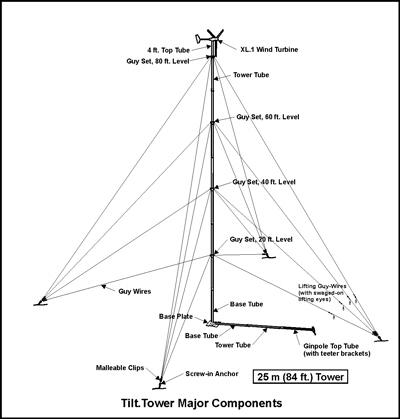
Tilt-up Tubular Towers Wind generator output is normally better on tall towers. The wind is usually faster and smoother up higher. The tower can be installed without concrete work in areas with good soil strength and no rocks (that would impede the screw-in guy-wire anchors). In weak or rocky soils the use of concrete to fix the anchors is required. Proper grounding is an important element in protecting the system from lightning damage. Tower kits include galvanized 10 ft. 4.5 in. diameter tubular tower sections and associated hardware, guy anchors, guy wires and gin pole. Truck shipping. 60' 1TU18 80' 1TU24 100' 1TU30 |
|